
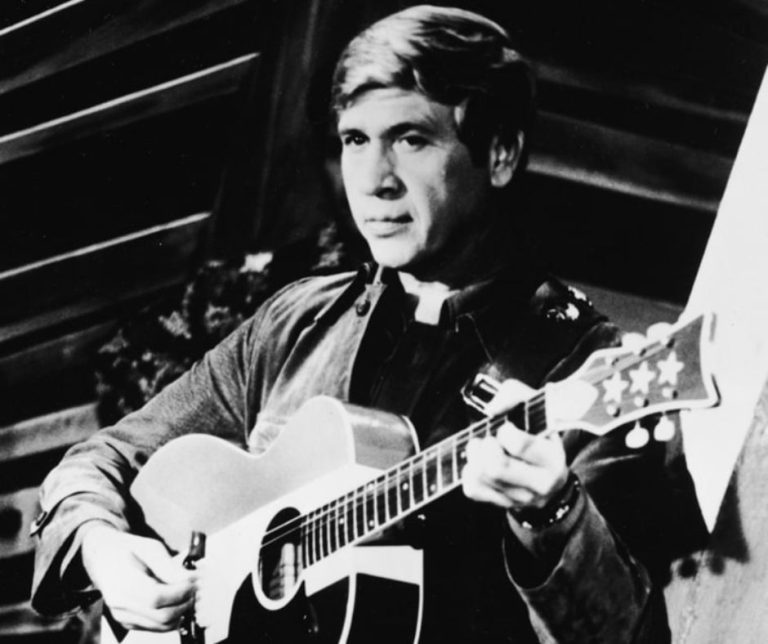
When people think of Buck Owens, they picture bright rhinestone suits, a fiery Telecaster, and the unmistakable twang of the Bakersfield Sound. But behind the spotlight was a man who, at times, felt unheard—not because he had stopped loving music, but because success sometimes carries a silent cost.
"I Don't Hear You" may not be his biggest chart-topper, yet it carries the classic Buck Owens signature: crisp rhythm, sharp electric guitar, and lyrics filled with restrained frustration. On the surface, the song tells the story of a relationship where communication has broken down. But to many fans, it echoes something deeper within his own life.
The Height of Fame—and Its Pressure
From the early 1960s through the mid-1970s, Buck Owens dominated country charts with more than 20 No. 1 hits. He also became a household name as co-host of the television show Hee Haw, one of America's most beloved country variety programs.
Yet "Hee Haw" was a double-edged sword. While it expanded his fame, it also boxed him into a comedic television persona. Critics sometimes overlooked his role as a musical innovator, focusing instead on the humor. For an artist deeply committed to his craft, that perception weighed heavily.
Eventually, Owens stepped back. He reduced touring, made fewer public appearances, and focused more on business ventures in Bakersfield, California. It wasn't a dramatic farewell—more a quiet retreat.
A Song as Metaphor
Listening closely, "I Don't Hear You" can be interpreted beyond romance. It can reflect the feeling of an artist who sensed that the industry—and perhaps even parts of his audience—were no longer listening the same way.
The Bakersfield Sound, built on electric guitars and stripped-down arrangements, had once challenged the smoother Nashville style. Buck Owens stood at its forefront. But as musical trends shifted, his influence seemed less central.
Not because he stopped caring. Quite the opposite. His refusal to compromise his sound may have cost him mainstream momentum—but it preserved his authenticity.
The Price of Success
Owens openly acknowledged that constant touring strained his personal life. Relationships suffered. The pressure to maintain commercial success never truly faded.
Success isn't just applause. It's late nights alone after the show. It's financial risk in running businesses. It's feeling misunderstood in the very industry you helped reshape.
In that light, "I Don't Hear You" feels almost prophetic—not as a sign of quitting music, but as a reminder of how easily voices can be drowned out in the noise of fame.
A Lasting Legacy
Despite quieter years, Buck Owens remains one of country music's most influential figures. Inducted into the Country Music Hall of Fame, his legacy lives on in generations of artists inspired by the Bakersfield Sound.
Looking back, "I Don't Hear You" doesn't signal withdrawal. Instead, it reveals the honesty of an artist navigating success on his own terms.