
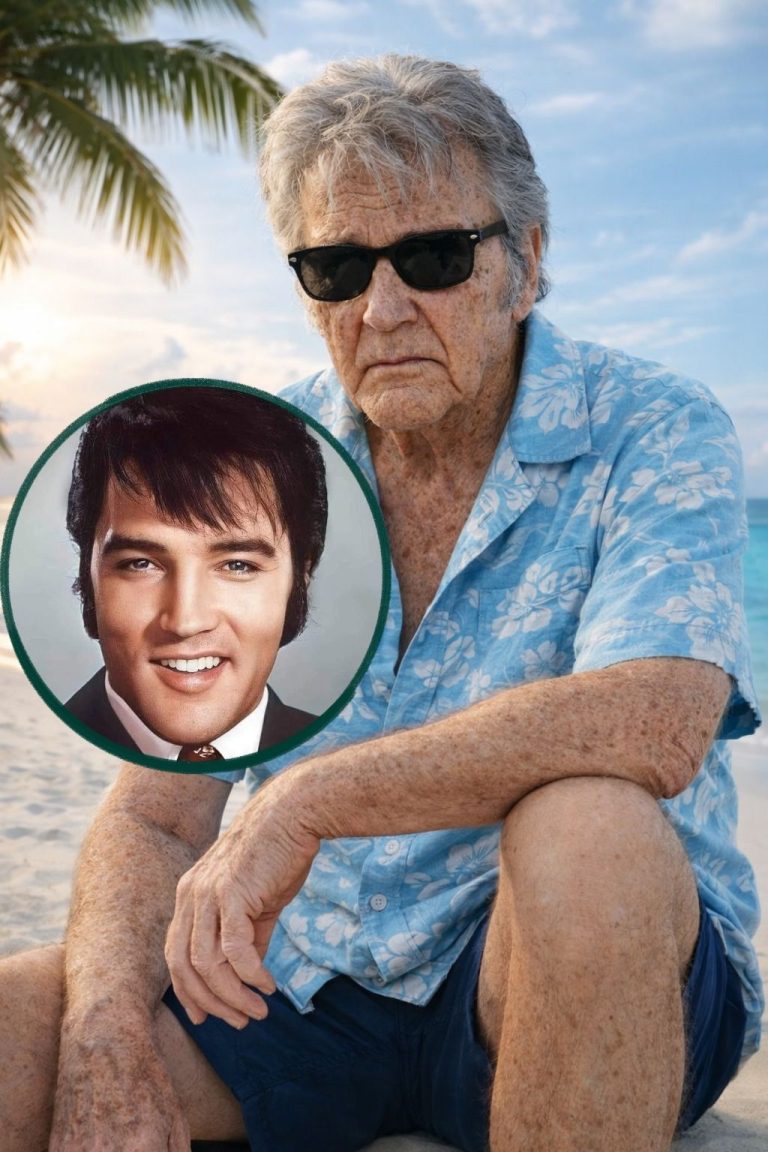
A shocking development has emerged from Memphis, Tennessee, sending waves of disbelief through both devoted fans and careful observers of history. Newly surfaced DNA test results are now being discussed with growing intensity, suggesting that a 90-year-old man may, in fact, be Elvis Presley himself. Long regarded as one of the most iconic figures in modern music, Elvis was officially declared deceased in 1977. Yet, this unexpected claim has reignited questions many believed were settled long ago, pulling attention back to a mystery that never fully faded.
Behind this revelation lies a trail of quiet testimonies, sealed documents, and years of speculation. Individuals who once remained silent are now stepping forward, offering fragments of information that seem to align in unsettling ways. The DNA findings, described by some as "compelling," have added a new layer of seriousness to a narrative previously dismissed as rumor. If verified, the implications would extend far beyond celebrity culture, touching on institutional credibility and the reliability of historical records.
A sense of tension now surrounds the story, driven by the possibility that the official account of Elvis Presley's death may not tell the full story. Conversations once confined to small circles are now entering the mainstream, with people revisiting old footage, photographs, and eyewitness accounts in search of overlooked details. Every piece of evidence, no matter how small, is being examined under a new light.
💬 "They knew the truth… and they chose to keep it hidden all these years."
That single statement, attributed to a source close to the investigation, has only deepened the intrigue. It hints at a scenario far more complex than a simple case of mistaken identity. Could there have been a deliberate effort to construct a narrative that the public would accept without question? Such a possibility challenges long-standing assumptions and invites a broader reflection on how easily perception can be shaped.
Throughout the decades, there have been countless sightings and claims regarding Elvis Presley's continued existence. Most were quickly dismissed, lacking credible evidence. However, the introduction of DNA analysis, widely regarded as one of the most reliable scientific tools available, changes the tone of the conversation significantly. This is no longer just a story fueled by nostalgia or imagination; it is now a matter that intersects with science, history, and public trust.
Skepticism remains, and rightly so. Extraordinary claims demand careful scrutiny, and many experts urge patience until further verification is conducted. Still, the emotional weight of the story cannot be ignored. For millions of fans who grew up with Elvis's music, the idea that he may have lived quietly, away from the spotlight, is both fascinating and deeply unsettling. It raises questions about identity, privacy, and the price of global fame.
Momentum continues to build as discussions spread across media platforms and private conversations alike. Some see this as a long-overdue uncovering of truth, while others remain cautious, warning against drawing conclusions too quickly. Regardless of where one stands, the situation has undeniably reopened one of the most enduring mysteries in entertainment history.
A deeper question now lingers beneath the surface. If this revelation proves to be accurate, it suggests that a carefully constructed version of events was accepted by the world for nearly half a century. Such a realization would not only reshape the legacy of Elvis Presley but also prompt a wider reconsideration of other accepted narratives.
Uncertainty remains at the heart of this unfolding story. Evidence continues to emerge, opinions continue to clash, and the full truth remains just out of reach. Whether this turns out to be a historic breakthrough or another chapter in a long line of speculation, one thing is clear—the mystery is far from over, and the final answer may challenge more than anyone expects.